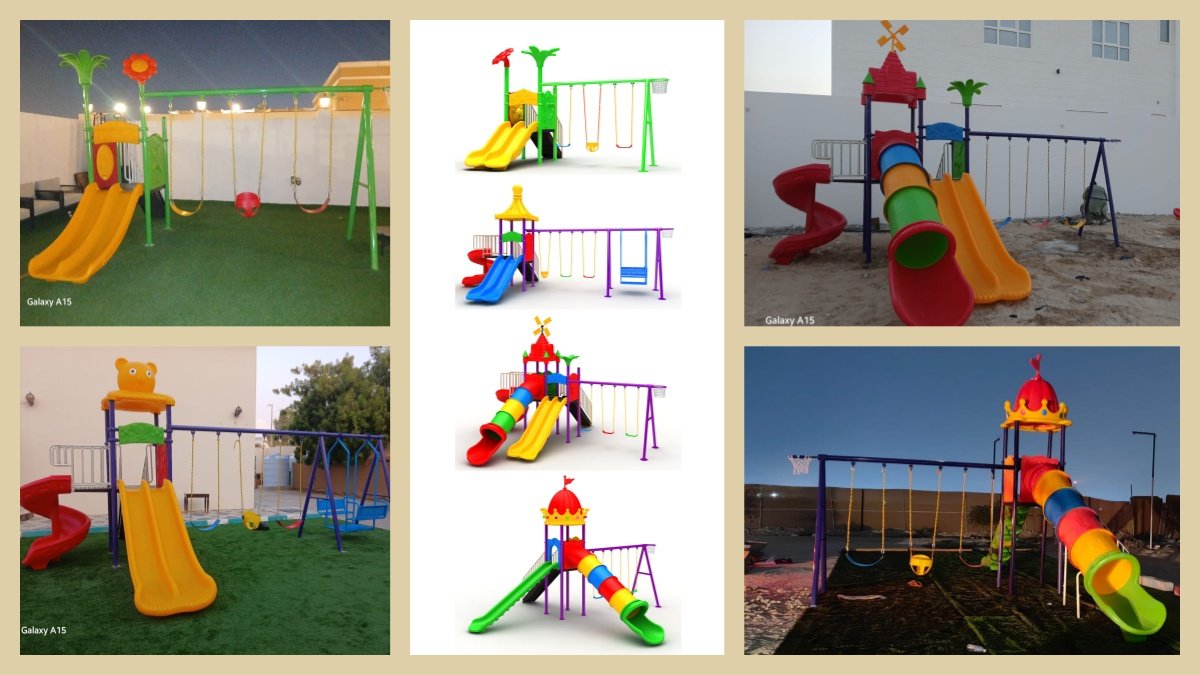
For kindergarten procurement teams, community project owners, and playground equipment distributors
The most common mistake in combo slide procurement isn’t paying too much—it’s buying “off-target.” Fill a site with only 80cm combo slide platforms and it passes inspection, but older kids visit once and never return. Fill it with only 160cm combo slide platforms and it looks impressive, but nobody in the younger age group dares to climb, and safety complaints arrive first. The four combo slide platform heights—80, 120, 140, and 160cm—aren’t meant to map onto four age brackets. Their real function is to divide a single combo slide installation into four different rhythms of use. The combo slide configuration logic below is written for project owners and distributors, not for parents.
🟢 80cm Platform: The “Safety Card” at Inspection
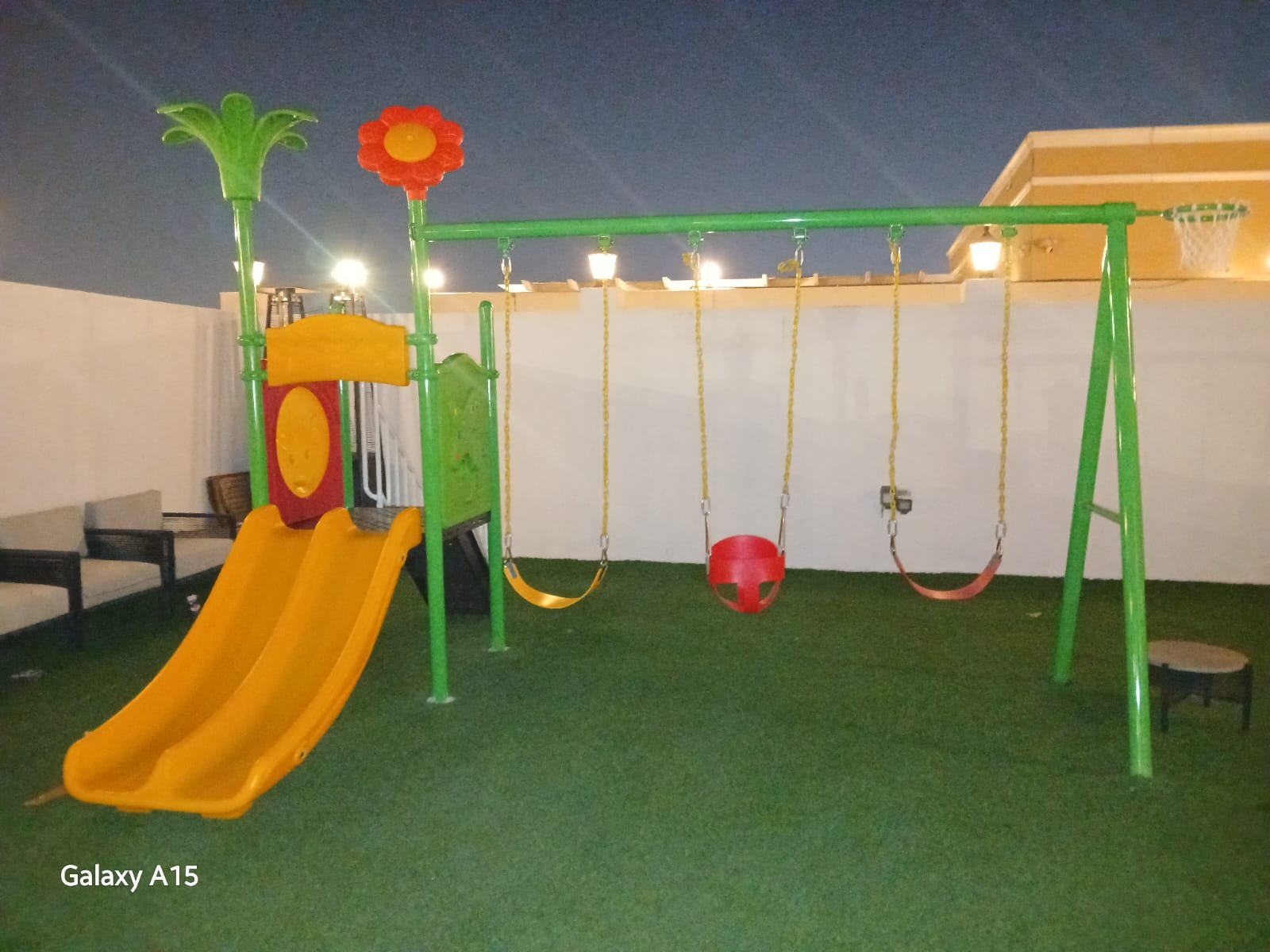
For B2B buyers, the value of an 80cm combo slide platform isn’t how much fun kids have on it—it’s that it’s the module least likely to generate safety complaints. The combo slide platform sits close to the ground, fall risk is low, and surfacing requirements are relatively moderate, making it the easiest element to pass fire and safety inspections.
In terms of equipment characteristics, low combo slide platforms typically pair with open straight slides or gentle-slope slides. Slide speed is mild, exit height is low, and landing impact is small. The climb path on a low combo slide is short—a brief set of steps or a gentle ramp is enough, with no complex climbing structure required.
Configuration advice: Even if the project targets mostly older children, keep at least one 80cm combo slide platform group to serve the most cautious users in mixed-age scenarios—avoiding the awkward situation where “there’s nowhere on site anyone dares to play.” It also suits positions where caregiver sightlines need to be unobstructed: the combo slide platform is low, so you can see at a glance what users are doing. Kindergarten projects especially need this combo slide height as the core module of the younger class activity zone.
🔵 120cm Platform: The “Backbone Tier” for Kindergarten Projects
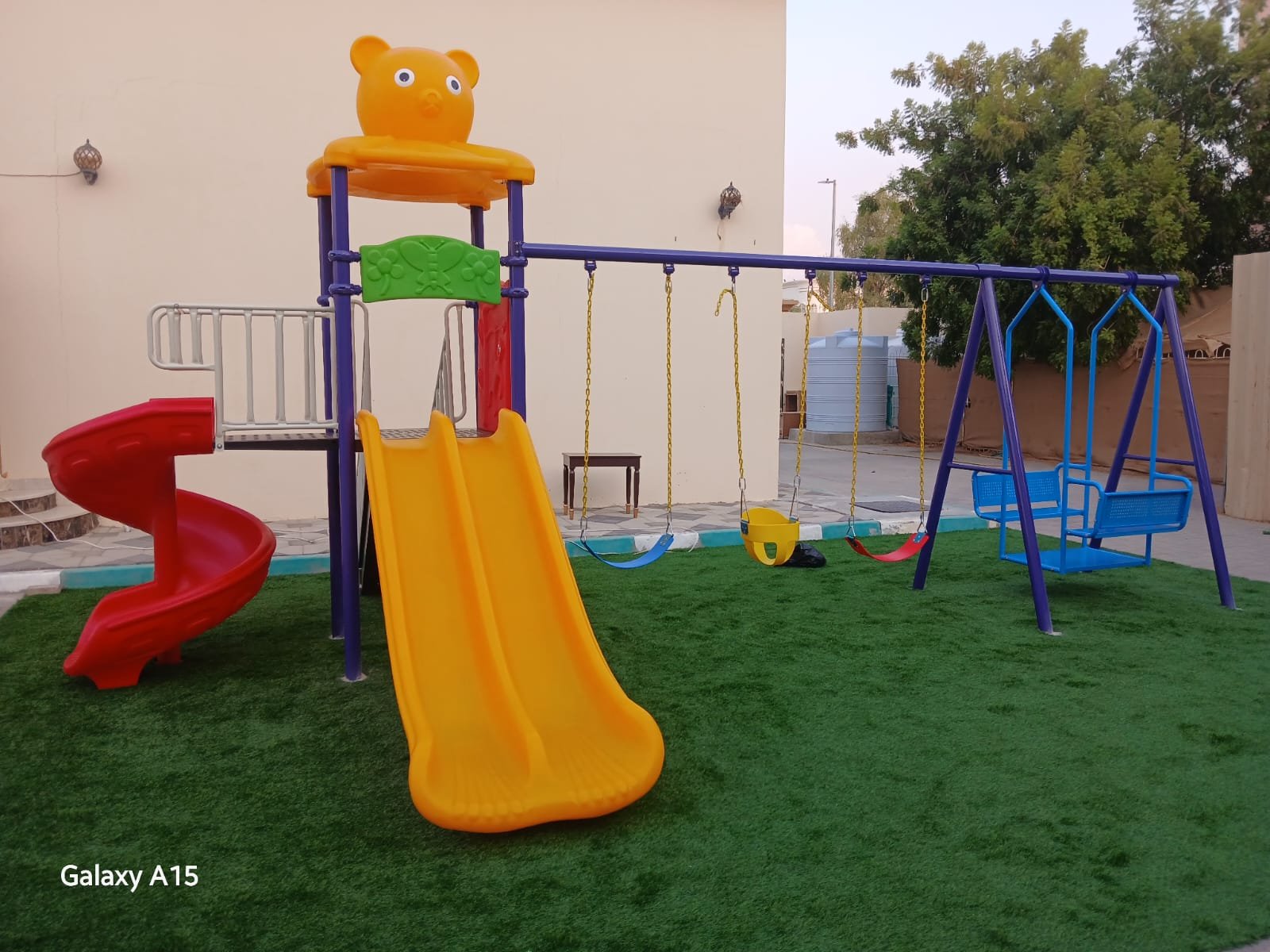
If the client is a kindergarten, a 120cm combo slide platform is a tier that must be taken seriously. In industry practice, kindergarten combo slide platform heights are typically kept between 0.8 and 1.2 meters, and 120cm sits right at the upper edge of that range. The combo slide procurement logic: it lets middle and senior class children feel there’s “something to play with,” without giving the kindergarten grounds to be questioned during safety approval.
The unique value of the 120cm combo slide platform is that it bridges both ends. It clearly feels more like “climbing up” than an 80cm combo slide—the climb path gets longer and the platform view opens up—but it’s not so high that inexperienced users are intimidated. This combo slide height is best suited to a “divider” function: moving users who can already climb independently but don’t yet need high-intensity challenge away from the younger zone, preventing everyone from queuing at the 80cm combo slide area. Slide formats on a 120cm combo slide can include straight slides, gently curved slides, or short slide tubes, and climbing entries can introduce simple rope nets or low climbing panels—adding interest without becoming a hard barrier.
Configuration advice: For distributors, the 120cm combo slide is the best-selling mainstay—cheaper than high platforms, broader in application than 80cm, and clients feel it’s “big enough.” If a combo slide set has only 80cm and 140cm platforms, there’s an experience gap in between; the 120cm combo slide platform fills that gap precisely.
🟠 140cm Platform: The “Traffic Driver” for Parks and Communities
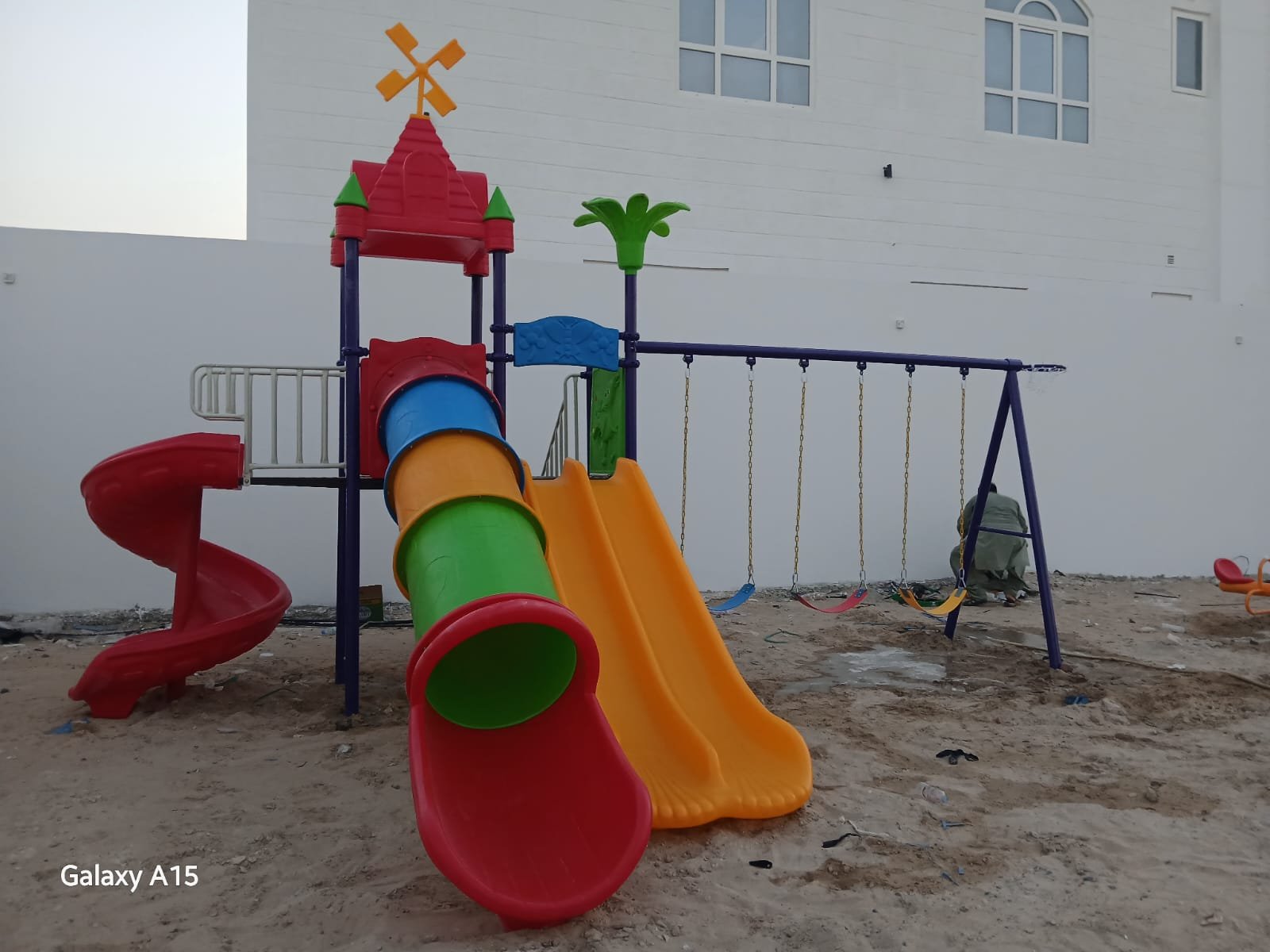
The biggest fear for community and park project owners is a combo slide that, once installed, “only little kids play on—older kids walk right past without a glance.” The 140cm combo slide platform is the key tier that solves this problem.
At 140cm, the combo slide advantage shifts from “can you get up there” to “sliding down is actually interesting.” This combo slide height supports longer slides and richer slide formats—a full curve, a wave section, or a short spiral. Slide time lengthens and the sense of speed is more pronounced, yet it hasn’t reached the point of demanding extreme body control. Climbing methods on a 140cm combo slide can begin to diversify: beyond steps, you can add inclined climbing panels, short rope nets, or crawl tunnels, making the “going up” process itself part of the play.
For project owners, the 140cm combo slide is a highly cost-effective mainstay tier. It’s only 20cm taller than the 120cm combo slide, but the design room for slides is far greater; and unlike a 160cm combo slide, it doesn’t impose harsh requirements on climbing entries and protective configurations—it also fits more easily into sites with limited area, since slide length and buffer distance requirements are relatively moderate.
Configuration advice: If the site is medium-sized and the budget limited, making the 140cm combo slide the main slide paired with 80cm or 120cm combo slide platforms for zoning is the most cost-effective combination for covering the client base.
🔴 160cm Platform: The “Signature Slot” for Tourism and Commercial Projects
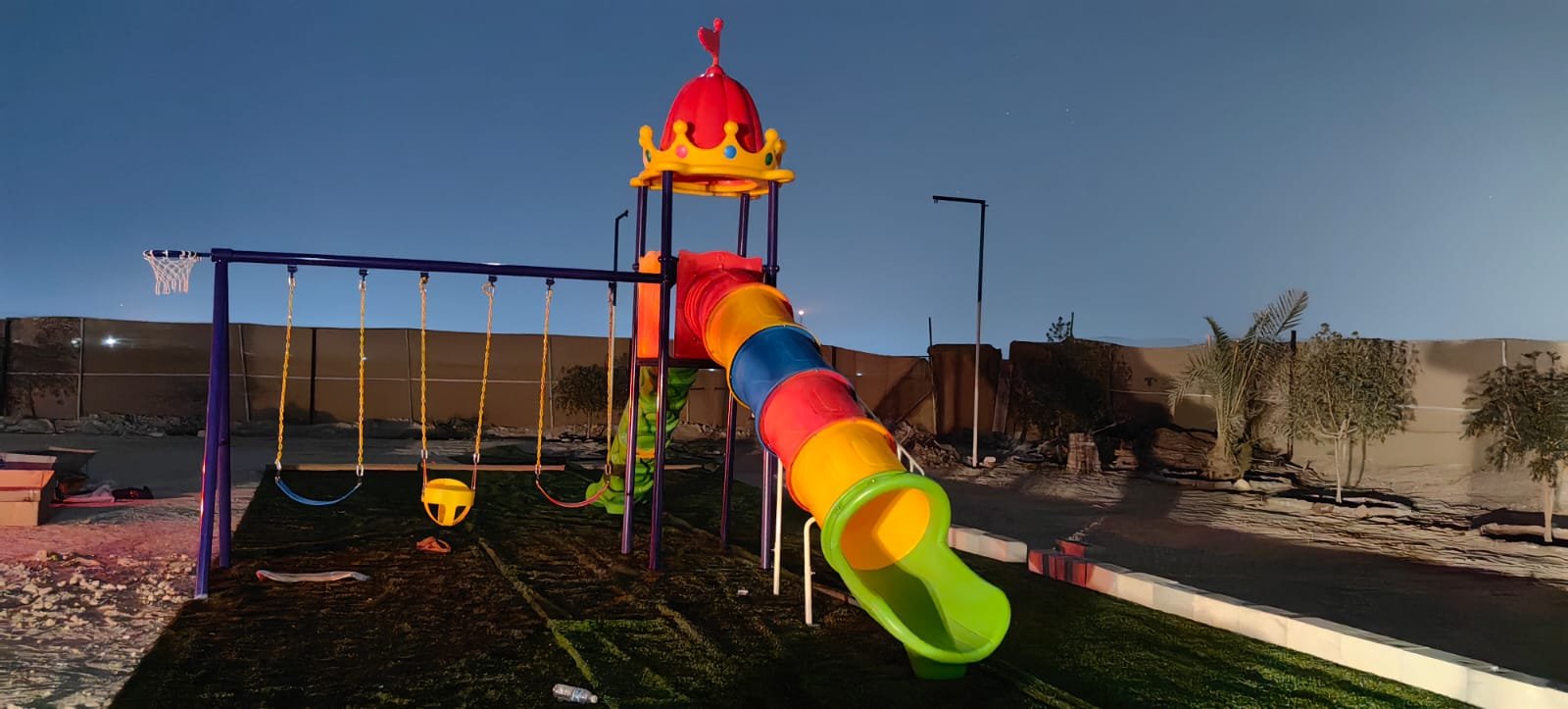
The 160cm combo slide platform isn’t for every project. Its combo slide procurement logic is “either don’t do it, or do it fully”: a higher combo slide platform means longer slides, surfacing that must be configured for the corresponding fall height, and an expanded safe activity zone.
The advantage of the 160cm combo slide isn’t “suiting more people”—it’s providing stimulation and physical load that low combo slide platforms can’t replace. Slides are longer and faster, and climbing paths are often no longer steps but vertical climbing walls, suspended rope nets, or obstacles requiring core strength. This combo slide height makes real demands on users’ upper-body strength, balance, and ability to make judgments at height—which is precisely why it’s the most physically demanding part of a combo slide set. From a site configuration standpoint, a 160cm combo slide shouldn’t sit next to the younger zone; it should be an independent high-challenge module, or clearly zoned apart from low combo slide platforms.
Configuration advice: If the budget is tight and the site small, forcing in a 160cm combo slide will squeeze out space for other modules. But if the client is a tourism scenic area, large community, or commercial park needing a core combo slide piece that “looks substantial and works as a photo spot,” 160cm is the element in the combo slide that best carries the presence. For distributors: the 160cm combo slide isn’t sold to every client—it’s used to differentiate client tiers. For budget-ready projects, this combo slide height is the closing hook.
🧭 On One Site, Each Combo Slide Height Does One Job
B2B buyers don’t need to memorize “how many centimeters equals how many years old” for a combo slide. What they need to remember is: low combo slide platforms secure inspection, mid combo slide platforms secure coverage, high combo slide platforms secure appeal.
| Height | Icon | Role | One-Line Job |
|---|---|---|---|
| 80cm | 🟢 | Safety card | Answers “dare they play” |
| 120cm | 🔵 | Backbone tier | Answers “from daring to playing well” |
| 140cm | 🟠 | Traffic driver | Answers “playing is interesting” |
| 160cm | 🔴 | Signature slot | Answers “playing is a thrill” |
- 🟢 80cm combo slide answers “dare they play”—the steadiest safety card;
- 🔵 120cm combo slide answers “from daring to playing well”—the backbone tier for kindergarten projects;
- 🟠 140cm combo slide answers “playing is interesting”—the traffic driver for community parks;
- 🔴 160cm combo slide answers “playing is a thrill”—the signature slot for tourism and commercial projects.
Explaining the division of labor among the four combo slide heights clearly is far more useful than providing an age-comparison table.
Get a Quote !